heart failure

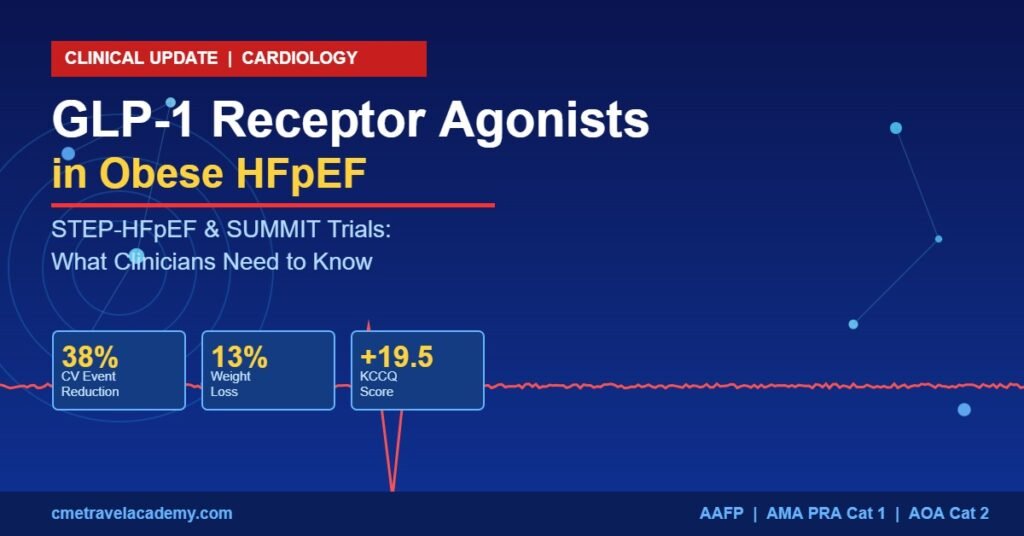
GLP-1 Receptor Agonists in Obese HFpEF: What the STEP-HFpEF and SUMMIT Trials Mean for Your Practice

Heart failure with preserved ejection fraction (HFpEF) now accounts for more than half of all heart failure diagnoses in the United States, and the proportion continues to rise alongside the obesity epidemic. For decades, clinicians managing this phenotype had few effective pharmacologic tools — spironolactone and SGLT-2 inhibitors offered modest benefit in selected patients, but

GLP-1 Receptor Agonists in Obese HFpEF: What the STEP-HFpEF and SUMMIT Trials Mean for Your Practice Read More »

Why Top Chronic Diseases for Internal Medicine and Family Medicine

Why Primary Care Physicians Should Prioritize the Top Chronic Diseases

Primary care physicians—family physicians, internists, NPs, and PAs—are the backbone of healthcare. On any given clinic day, a PCP treats a wide range of issues: UTIs, URIs, back pain, rashes, warts, hypertension follow-ups, dizziness, and more. Ideally, we would stay up to date on every possible condition. But in reality, modern primary care makes that

Why Primary Care Physicians Should Prioritize the Top Chronic Diseases Read More »

SGLT2i use in Heart failure

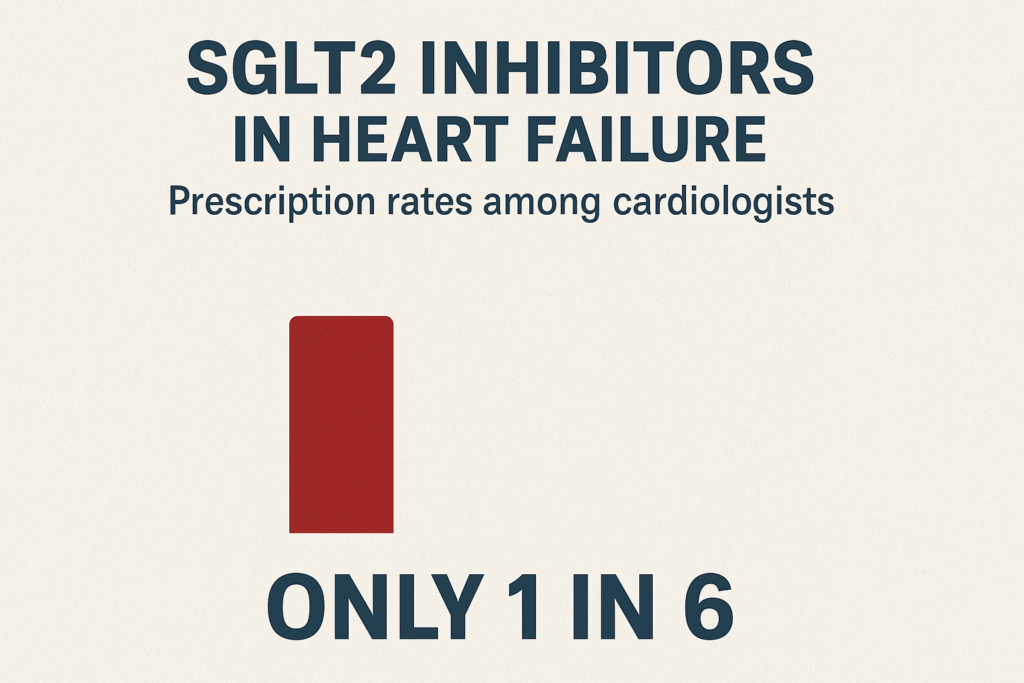
SGLT2 Inhibitors in Heart Failure: Underused Even Among Cardiologists?

A Missed Opportunity: SGLT2 inhibitors in Heart Failure Care Sodium-glucose cotransporter 2 inhibitors (SGLT2i) have transformed heart failure management, reducing both hospitalizations and cardiovascular deaths across the ejection fraction spectrum. Guidelines now recommend SGLT2i as foundational therapy for patients with heart failure—yet real-world prescribing still lags far behind. A new retrospective cohort study of over

SGLT2 Inhibitors in Heart Failure: Underused Even Among Cardiologists? Read More »