
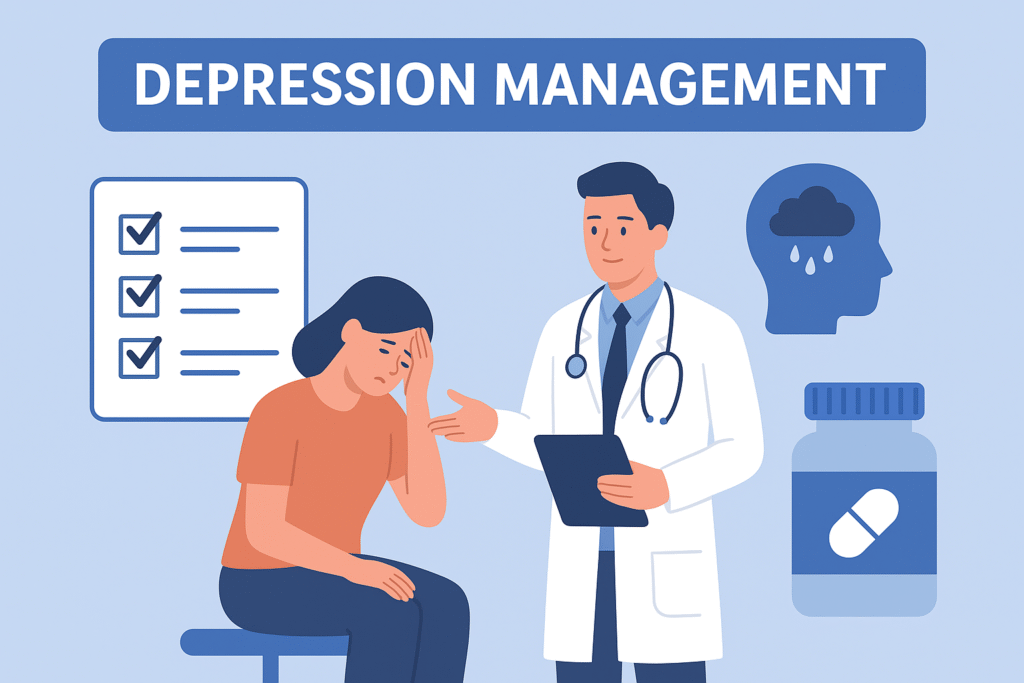
Depression is one of the most common mental health conditions encountered in primary care, internal medicine, and family practice settings, affecting millions of adults annually. Early identification and evidence-based management are essential to improving patient outcomes, quality of life, and functional recovery.
However, many clinicians face challenges in integrating mental health care into busy practices. Continuing medical education (CME) programs focused on depression management provide practical strategies, case-based learning, and updates on pharmacologic and non-pharmacologic treatment options. This blog outlines actionable approaches for effective depression care in primary care settings, backed by current guidelines.
1. Routine Screening with Validated Tools
Depression often goes unrecognized, especially when patients present with somatic complaints. Screening is the first step in effective management.
Recommended tools:
- PHQ-2: Quick initial screen; if positive, follow with PHQ-9.
- PHQ-9: Standard tool for diagnosis and monitoring symptom severity.
- GAD-7: Useful when anxiety symptoms are present, which is common in primary care.
Practical tips:
- Incorporate screening into routine visits, annual wellness exams, and chronic disease follow-ups.
- Document results in the electronic health record to facilitate tracking and follow-up.
- CME courses often include interactive case scenarios to practice implementing screening workflows efficiently.
2. First-Line Pharmacologic Management
Once depression is identified, treatment selection depends on severity, comorbidities, patient preference, and prior response.
First-line pharmacologic options (guideline-based):
- SSRIs (Selective Serotonin Reuptake Inhibitors):
- Examples: sertraline, escitalopram, fluoxetine, citalopram
- Well-tolerated, safe in most adults, including those with chronic conditions
- SNRIs (Serotonin-Norepinephrine Reuptake Inhibitors):
- Examples: venlafaxine, duloxetine
- Useful if there is coexisting neuropathic pain or fibromyalgia
- Other considerations:
- Bupropion: Often preferred if fatigue or sexual side effects are a concern
- Mirtazapine: Can be helpful for patients with insomnia or weight loss
Monitoring and titration:
- Most antidepressants require 4–6 weeks for full effect; monitor side effects and adherence closely.
- Use PHQ-9 or clinical assessment to track improvement.
- Adjust dose or switch agents if inadequate response after 6–8 weeks.
3. Non-Pharmacologic and Psychotherapy Options
Evidence shows that combining therapy with medication can improve outcomes, especially in moderate to severe depression.
Therapy approaches commonly used in primary care:
- Cognitive Behavioral Therapy (CBT): Structured, goal-oriented, and evidence-based.
- Interpersonal Therapy (IPT): Focuses on relationship and social functioning issues.
- Brief behavioral interventions: Effective in busy practices; can be delivered in 10–20 minute sessions.
Collaborative care model:
- Integration of behavioral health specialists into the primary care team
- Case management, follow-up, and coordination improve adherence and outcomes
- CME programs often provide interactive examples of collaborative care workflows.
4. Follow-Up and Monitoring
Regular follow-up is crucial to evaluate treatment response, adherence, and side effects.
Practical tips:
- Schedule follow-ups at 2–4 weeks initially and then monthly until remission.
- Adjust therapy based on symptom trajectory and PHQ-9 scores.
- Consider switching medication or adding psychotherapy if there is incomplete response.
- Encourage lifestyle modifications (exercise, sleep hygiene, social support) alongside medical therapy.
CME benefit: Programs often simulate follow-up scenarios to train clinicians in timely adjustments and shared decision-making.
5. Addressing Comorbidities
Depression frequently coexists with chronic medical conditions, including diabetes, hypertension, cardiovascular disease, and chronic pain.
Key strategies:
- Integrate depression care with chronic disease management for holistic outcomes.
- Coordinate with specialists as needed, ensuring patient-centered care.
- CME courses focused on primary care or internal medicine highlight multimorbidity management, improving both mental and physical health outcomes.
Learn how chronic disease CME supports integrated depression care in clinical practice.
6. Patient Education and Engagement
Effective depression management involves patient participation and understanding.
Tips for clinicians:
- Discuss expected timelines for improvement and potential side effects.
- Encourage patients to track symptoms using apps or journals.
- Reinforce lifestyle strategies (physical activity, sleep, nutrition, social support).
- Share community or online mental health resources as adjunctive support.
7. CME as a Tool for Enhanced Clinical Skills
CME courses for primary care, internal medicine, and family practice clinicians provide:
- Interactive case-based learning
- Updates on first-line and adjunctive therapies
- Practical tools for screening, follow-up, and patient engagement
- Evidence-based strategies for improving outcomes in real-world practice
Conclusion
Depression management in primary care is a multifaceted process that involves screening, evidence-based pharmacologic and non-pharmacologic treatments, careful monitoring, and attention to comorbidities. CME programs designed for primary care, internal medicine, and family practice clinicians equip providers with the knowledge, tools, and confidence to deliver high-quality care.
Join Us: Learn, Relax, and Recharge
CME Travel Academy offers engaging CME experiences in beautiful destinations—because great learning happens when the mind is refreshed.
Upcoming events include:
- New Orleans CME Conference in March 2026 – Focus on Top Chronic Conditions in America including Depression
- Las Vegas CME Conference in March 2026 – Focus on chronic disease management
- San Diego CME Conference in May 2026 – Featuring updates in cardiovascular and metabolic medicine
- Disney World CME Conference in July 2026 – enjoy Disney and learn the latest updates!
Each course includes the same evidence-based foundation and long-term spaced-repetition curriculum designed to make learning stick.
Take the next step toward mastering the latest in heart failure management—and rediscover why you love practicing medicine.
Learn more and see all our upcoming 2026 conferences.