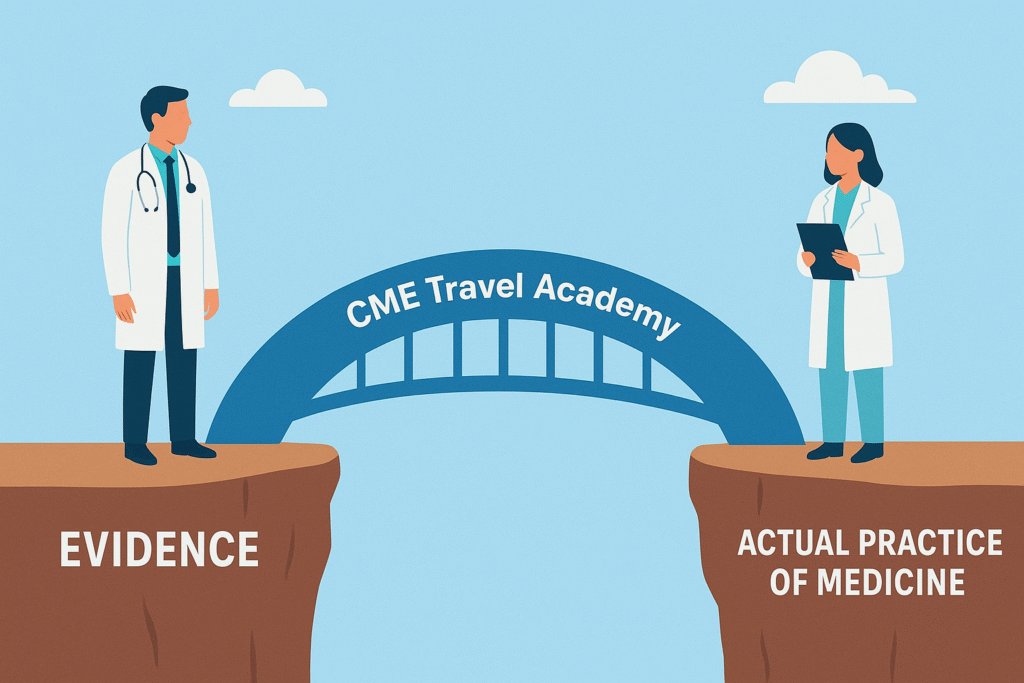
Despite the rapid evolution of clinical science and the publication of robust guidelines, the translation of evidence into everyday medical practice remains inconsistent. Here are five striking examples where the gap between what should happen and what actually happens is especially wide.
1. Underutilization of SGLT2 Inhibitors in CKD and Heart Failure
SGLT2 inhibitors have emerged as a transformative therapy for patients with CKD and heart failure, regardless of diabetes status. Large randomized trials and meta-analyses have shown that SGLT2i reduce the risk of kidney failure, cardiovascular death, and hospitalization for heart failure in these populations, with benefits extending to those without diabetes. The American Diabetes Association and KDIGO guidelines now recommend SGLT2i as foundational therapy for adults with CKD (eGFR ≥20 mL/min/1.73 m²) and/or heart failure, independent of glycemic control. Despite these recommendations, SGLT2i remain markedly underused in clinical practice, especially among patients without diabetes and in certain subgroups with lower albuminuria. Barriers include lack of awareness, uncertainty about benefits in non-diabetic CKD, concerns about adverse effects, and disparities in access and prescribing patterns. This underuse represents a major missed opportunity to reduce morbidity and mortality in high-risk populations.
2. Suboptimal Implementation of Guideline-Directed Medical Therapy (GDMT) for Heart Failure
Guidelines advocate for a quadruple therapy approach in heart failure with reduced ejection fraction (HFrEF)—including ACE inhibitors/ARNI, beta-blockers, mineralocorticoid receptor antagonists, and SGLT2i. However, most patients receive only partial regimens, with less than half on all four classes. Clinical inertia, polypharmacy concerns, and lack of familiarity with newer agents contribute to this gap, resulting in preventable hospitalizations and deaths.
3. Overuse of Non-Evidence-Based Interventions
Despite clear recommendations against routine imaging for low back pain or thyroid ultrasonography in asymptomatic patients, these practices persist. Such interventions offer little benefit and may lead to unnecessary procedures, costs, and patient anxiety. The persistence of these low-value services highlights the challenge of de-implementing entrenched habits, even when guidelines are unequivocal.
4. Inadequate Use of Cardioprotective Therapies in Diabetes
Major guidelines now recommend SGLT2i and GLP-1 receptor agonists for patients with type 2 diabetes and cardiovascular disease, given their proven ability to reduce major adverse cardiovascular events and heart failure. Nevertheless, most patients with diabetes and established CVD remain on older agents (e.g., sulfonylureas, insulin) that do not confer cardiovascular protection and may even increase heart failure risk. Therapeutic inertia, cost concerns, and lack of awareness drive this disconnect, despite clear evidence and guideline support.
5. Disparities in Care Delivery and Guideline Uptake
Guideline-recommended therapies are less frequently prescribed to older adults, women, and racial/ethnic minorities, even when equally eligible. For example, SGLT2i use in CKD and heart failure is lower among these groups, contributing to persistent disparities in outcomes. Systemic barriers, implicit bias, and differences in healthcare access all play a role, underscoring the need for targeted interventions to ensure equitable care.
Conclusion
These examples illustrate that the journey from evidence to practice is fraught with obstacles—clinical inertia, entrenched habits, systemic barriers, and disparities. Bridging these gaps requires not only dissemination of guidelines but also active implementation strategies, education, and system-level change. The underuse of SGLT2 inhibitors in CKD and heart failure is emblematic of a broader challenge: ensuring that the best available evidence truly benefits patients in the real world.
Bridging the gap between evidence and practice requires more than simply publishing guidelines—it demands practical, actionable education that equips clinicians to implement what they learn. At CME Travel Academy, we address this challenge head-on. Our immersive CME programs combine evidence-based instruction with real-world tools such as one-page point-of-care references and year-long spaced repetition follow-up. We focus on helping clinicians overcome clinical inertia, integrate new therapies like SGLT2 inhibitors into practice, reduce low-value care, and address disparities in treatment. By translating guidelines into actionable steps, CME Travel Academy empowers clinicians to deliver the highest-quality care, ensuring that patients truly benefit from the latest advances in medicine.
Want to earn accredited CME while staying current? CME Travel Academy offers evidence-based, zero-commercial-bias conferences led by actively practicing physicians. Earn 12 AMA PRA Category 1 Credits™ (AAFP Prescribed, AOA Category 2) at an upcoming 2026 conference:
- Walt Disney World, Orlando — July 17–18, 2026 (from $895)
- New York City — October 12–13, 2026 (from $995)
- Las Vegas at Caesars Palace — December 18–19, 2026 (from $995)
Morning sessions only, afternoons free. View all 2026 conferences and register →